Living in Pittsburgh's South Hills: What It's REALLY Like
The honest guide to living in Pittsburgh's South Hills — Mt. Lebanon, Upper St. Clair, Bethel Park, Dormont, Peters Township, the T, trails, and real commutes.
Living in Pittsburgh's South Hills: What It's REALLY Like
I train people for a living. Twenty-plus years as an exercise physiologist. And when a relocating buyer asks me where to live in Pittsburgh, I don't start with square footage. I start with one question: how do you want to move through your day? Walk to coffee? Ride a train downtown? Run trails from your back door? Your answer picks your town. And in the South Hills, every town answers differently. Here's what it's really like.
The South Hills in One Sentence
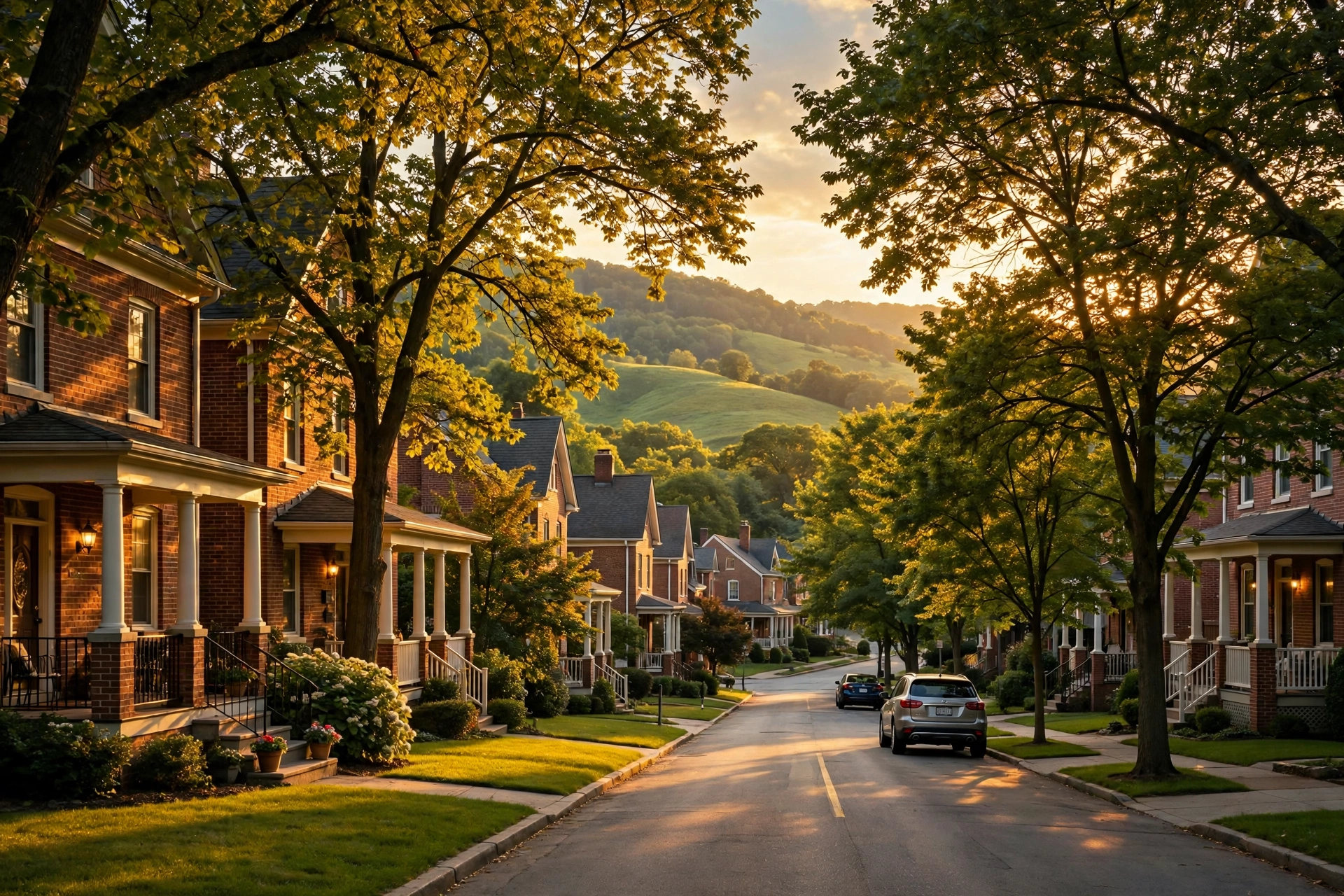
The South Hills are the suburbs south of the Monongahela River — fifteen to thirty minutes from downtown Pittsburgh. Brick houses. Real main streets. Some of the top-ranked school districts in Pennsylvania. And the T, Pittsburgh's light rail, running straight through the middle of it.
If the North Hills are Pittsburgh's newer, shinier suburbs, the South Hills are the ones with character. Front porches. Walkable business districts. Neighborhoods that feel like small towns that grew together instead of developments that got built. I've shown homes all over this metro for years now, and I keep coming back to the same conclusion: if you want charm and community, you land south of the rivers.
Mt. Lebanon: The Flagship
Start with Mt. Lebanon. This is the flagship town of the South Hills, and it's my number one pick for most relocating families.
Washington Road is a real main street — shops, restaurants, coffee, the T stop right in the middle of it. You can live here and walk to dinner. That's rare in Pittsburgh suburbs, and it matters more than people think until they've lived without it.
The housing is famous for a reason: brick Tudors, colonials, houses with actual architecture. Most of it runs $300,000 to $500,000-plus. You're paying for the package — the schools are elite, consistently top-ranked in the state, and the community is the kind where people know their neighbors.
Then there's Bird Park — 50-plus acres of wooded trails right in town. As a trainer, I notice these things: Mt. Lebanon is a town where an active lifestyle doesn't require a plan. It just happens. You walk to the T. You run the park. The hills do the rest.
Fifteen minutes downtown off-peak. That's the whole pitch. Walkability, top schools, fifteen minutes out.
Upper St. Clair: Polished and Planned
Next door: Upper St. Clair. If Mt. Lebanon is charming, Upper St. Clair is polished.
This is the planned, pristine version of the South Hills. Bigger lots. Newer-feeling even where it's older. Immaculate streets. The schools are right there with Mt. Lebanon at the top of the state rankings — ranked #2 in Pennsylvania by the Pittsburgh Business Times' 2025 guide. Price band is similar — $300,000 to $500,000-plus, with plenty of inventory pushing past $600,000.
The trade: it's more car-oriented. You drive to most things. But what you get is space and quiet and some of the most well-kept neighborhoods in the metro. For buyers who want top schools and a bigger yard and don't need to walk to coffee, Upper St. Clair is the answer.
Bethel Park: The Value Play
Now Bethel Park. This is the value play of the South Hills, and I mean that as a compliment.
$250,000 to $350,000 gets you a lot of house here — brick ranches, split-levels, colonials on real lots. Good schools (Niche A-minus, top 20 in the Pittsburgh area). The T runs through it — Washington Junction is a major station. South Park — one of the biggest county parks in the region at 2,000-plus acres — is right there, with trails, fields, and room to breathe.
Dollar for dollar, Bethel Park might be the best buy in the South Hills for a young family. You're ten minutes from Mt. Lebanon's main street, you're on the T line, and your mortgage is meaningfully smaller. I've watched buyers tour Mt. Lebanon, love it, then buy in Bethel Park and bank the difference. Smart move.
Dormont: Walkable and Fun
Dormont is the South Hills' wild card, and I love it.
It's denser, a little edgier, and actually walkable — Potomac Avenue has restaurants, bars, shops, and T stops that put you downtown in about twenty minutes. The housing is older and full of character: $200,000 to $350,000 for homes with porches and personality. You can still find livable homes in the low $200,000s if you're flexible on updates.
Here's what I tell buyers: Dormont is where the South Hills meets city energy. Younger buyers, first-timers, people who want to walk to dinner and ride the T to work — this is their town. And from the trainer's chair: it's one of the few suburbs where you can build a car-light life. Walk to the station. Walk to dinner. The hills between errands are your workout.
Peters Township: Newer and Bigger
Head south into Washington County and you hit Peters Township — most people just say McMurray. Different county, different feel.
This is the newer-build side of the South Hills — bigger lots, newer construction, $350,000 and up, with quality single-family homes running from the $400s into the $700s. Excellent schools — ranked #2 out of 606 Pennsylvania districts by SchoolDigger. And the Montour Trail runs through it, which means you can bike for miles without touching a road. For active families who want space and newness, Peters Township delivers.
One thing to know: because it's in Washington County, not Allegheny, the property tax structure is different. The county millage is lower, and several Washington County municipalities carry lighter total rates than their Allegheny neighbors. Some buyers target Peters Township partly for that reason. I run the exact numbers with my buyers before they write offers — the millage is public, and there are no surprises if you do the homework.
The trade: no T service this far south. You're driving. About 25 minutes to downtown by car.
Don't Sleep on South Park Township and Castle Shannon
Two more worth knowing. South Park Township sits next to the park itself — more house for the money (median listing around $292,000), quiet streets, and you're minutes from 2,000-plus acres of trails and fields. The Silver Line's southern end serves the area.
Castle Shannon has T stations, trail access, and some of the most affordable entry points in the South Hills — homes regularly available in the low-to-mid $200s. Same Keystone Oaks schools as Dormont.
These are the towns buyers discover on their second or third tour, and sometimes they end up being the pick. Don't skip them.
The T: The South Hills' Secret Weapon
Let me talk about the T, because it's the South Hills' secret weapon and most relocators underestimate it.
Pittsburgh's light rail runs from South Hills Village up through Bethel Park, Mt. Lebanon, and Dormont, straight into downtown. Three lines serve the corridor — the Red, Blue, and Silver. Park at the station, ride in, skip the Liberty Tubes entirely. From Mt. Lebanon station, downtown is roughly 25 to 30 minutes, reading your phone instead of gripping the wheel.
No other suburb cluster in Pittsburgh has this. The North Hills has buses. The South Hills has a train. In a city built on tunnels and bottlenecks, a second way downtown isn't a perk. It's a lifestyle.
And from my world: the most active commute in Pittsburgh is a T commute. You walk to the station. You walk from the station. Thousands of steps before your workday starts, without scheduling a single workout.
Trails, Parks, and the Trainer's Read
Here's my professional read on the South Hills, and I don't say this lightly: this is the most activity-friendly suburb cluster in the Pittsburgh metro.
The Montour Trail. Bird Park. South Park's trail system. Boyce-Mayview. You can run, bike, and hike for hours without leaving the South Hills. The neighborhoods themselves are hilly — and I say this as a trainer — the hills are free leg day. You don't need a gym membership when your daily walk has a 200-foot elevation change.
If an active lifestyle matters to you, the South Hills doesn't just allow it. It enforces it. In the best way.
The Commute, Straight
Quick reality check. Off-peak, most South Hills towns are fifteen to twenty-five minutes downtown. At rush hour, the Liberty Tubes and Fort Pitt Tunnel add time — that's just Pittsburgh. A 20-minute off-peak drive can become 35 to 40 minutes at 8 a.m. Everybody pays the tunnel tax somewhere.
This is exactly why the T matters so much here. When Route 19 is jammed and the tunnel is crawling, the train just goes. Plan your town around the T if your job is downtown. It's the single best commute decision a South Hills buyer can make.
Who the South Hills Is For
So who should live here? Families who want top schools and walkability in the same package. Buyers who want character — brick, porches, main streets — over brand-new everything. Active people who'll actually use the trails and the T. People who want community, not just a development.
Who shouldn't? If you need brand-new construction and HOA-fresh everything, look at Cranberry or Peters Township's newest builds. If your job is north of the rivers, the daily tunnel crossing gets old. Be honest about your commute before you fall in love with a town.
But for most relocating families I work with? The South Hills is the answer. Walkability, schools, character, and a train downtown. It's the complete package.
---
Questions about buying or selling in the South Hills? Call or text (724) 262-5749 — my assistant Rea answers 24/7.